Death of the Author, by Nnedi Okorafor

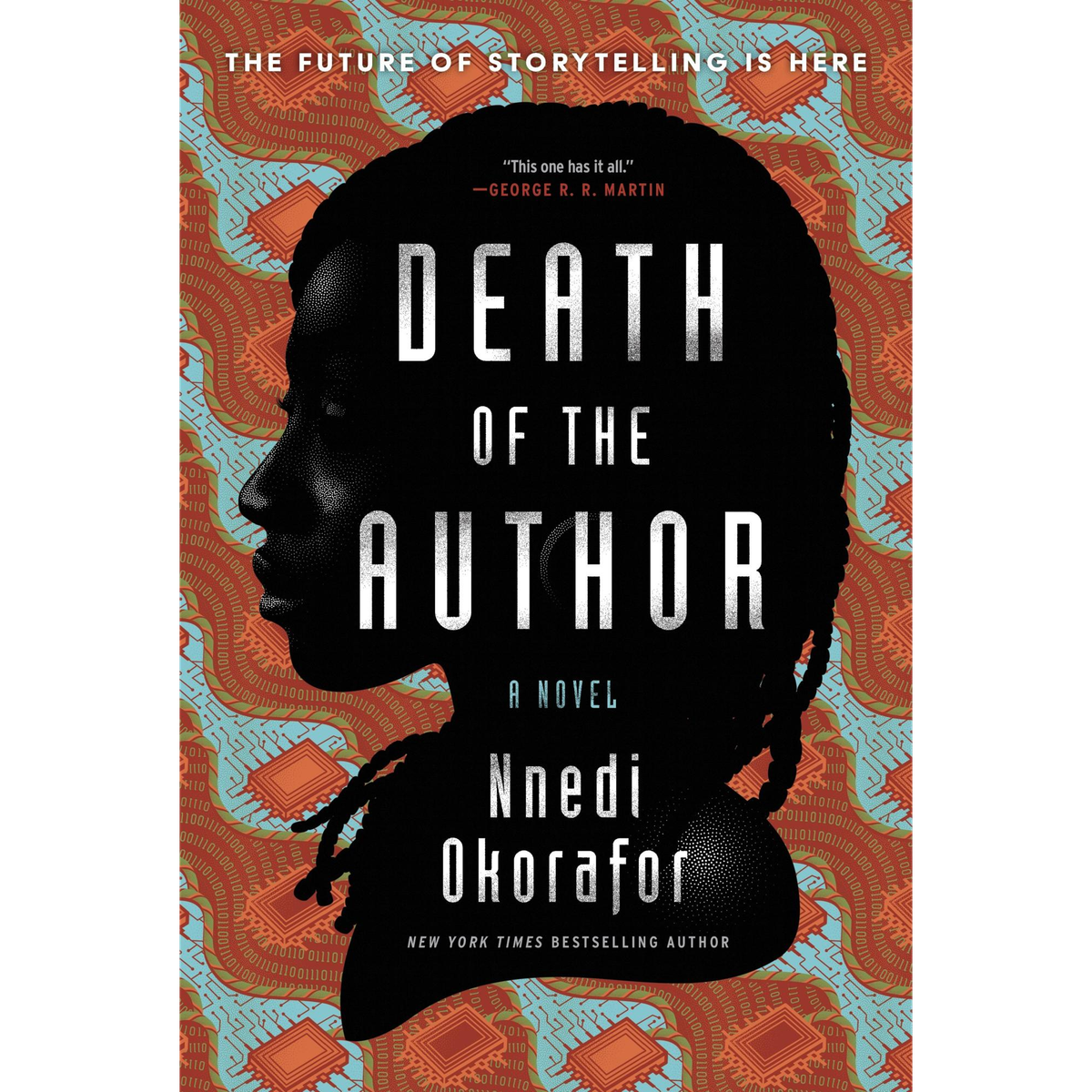
Death of the Author is the story of Zelu, the black sheep of an anything-but-ordinary Nigerian-American family. Her parents and her four siblings are astronomically accomplished STEM exemplars dwelling comfortably in Chicago's upper middle class. Not only are they educated and wealthy, they are also of minor royal blood through Zelu’s mother. They are the epitome of both Black and immigrant success in America, having passed both standards with flying colors.
In an affront to her more grounded family, Zelu is the only one that has chosen the arts for her career. She begins the novel as a creative writing major paying the bills as an adjunct lecturer, a career choice that puzzles her siblings and frustrates her parents. To top it all off, Zelu is paraplegic: doubly an outcast. This is most apparent when she visits her home country, as Nigerians are slow to accept, never mind understand, her disability. In response, Zelu has developed a chip on her shoulder that has seeded an eccentric, individualistic personality, expressed visibly in her preference for the bright colors and patterns of Ankara fabric.
Through the course of several years, Zelu gets fired from her adjunct job for lashing out at her students, writes a best-selling novel, watches as it becomes a chart-topping film, becomes the face of a new nano-neuro-mechanical orthotic technology, almost gets kidnapped in Nigeria, and becomes a civilian astronaut. Like many, she finds love and experiences loss. Unlike many, she becomes a multimillionaire and befriends the in-universe Jeff Bezos, with whom she blasts off into space.
At the beginning of the novel, Zelu’s prickly attitude towards the world invites pathos and empathy, and readers feel invited to join her on her journey of growth. But, to our frustration, we find that this journey goes in circles, stagnating despite her mounting achievements. Zelu remains the same self-conscious, arrogant, and selfish person through the many life-changing events that occur over the broad arc of the nearly ten years chronicled in Death. No matter how successful she is, she can only ever see herself and her triumphs through the eyes of her worst detractors. By the end of the novel, she has gained no wisdom.
If there were a true villain of the novel, it would be Okorafor herself. The obstacles that Zelu must continually overcome are all straw men that Okorafor conjures pro forma. Zelu’s family is a favorite vehicle for this role; despite them being extremely close-knit and mutually supportive, they will unyieldingly latch on to Zelu’s latest project with criticisms and doubt whenever Okorafor needs a conflict. And when Okorafor needs them to celebrate Zelu instead, they will all throw up their hands and say, “We were wrong. Pop the champagne!” This lack of consistency rips holes in otherwise interesting characters and reveals them to be cardboard cutouts made to validate Zelu’s frivolous insecurities.
Aside from her family and loved ones, conflicts are also assigned to throwaway characters who are barely given names (Brittany Burke and Ogo come to mind). In this category reside Zelu’s greatest nemeses: randos on social media. Whenever Okorafor wants to introduce external conflict to validate Zelu’s latest art, speech, or actions, it’s as easy as making Zelu glance at her phone and pay too much attention to some contrived troll. These specters are uninteresting to readers because they have no origins, no stories, no beliefs, no motives, and no weight to their words. They cannot be defeated by heroes, and even if they are, it means nothing because they are so unreal. The only way they can be worthwhile antagonists is if the protagonist learns to ignore them and believe in the strength and support of themself and their loved ones—which Zelu never does.
How can she, when she never introspects? After all, Zelu is a hothead who only ever considers two options: plunge forward or run away, often choosing both at the same time. She is not someone who considers the feelings of others or the fallout of her decisions. Her primary concern when quitting her job, joining the exoskeleton pilot program, embarking on a dangerous trip to her homeland, or even going to space while pregnant is always and solely her own emotions in the present moment.
When her family members, friends, or other confidants raise alternative perspectives in light of Zelu's newest adventure, she immediately discounts their advice with prejudice, anger, and paranoia. As she charges forward, she consistently cuts off communications with those who care about her rather than work through misunderstandings or worries together. And because Death of the Author is less science fiction than fantasy, Zelu is always rewarded for this course of action. She always succeeds at her task and gets to rub it in the face of her loved ones, who quickly get over their alienation and resume adoring her, no matter how many times she repeats the cycle.
The novel-within-the-novel, Rusted Robots, is as juvenile as can be expected of Zelu’s brainchild. It’s a thinly disguised fable with Aesopian talking animals swapped out one-to-one with nominally “robot” tribes. Rather than a groundbreaking work of science fiction, Rusted Robots is much closer in taxonomy to Paulo Coelho’s The Alchemist: vibes-based storytelling with a pedal point of New Age gnosticism.
Much like with The Alchemist, it’s entirely believable that this kind of book could become a smash hit and get optioned for a movie. But it’s what Zelu does with this success that only continues to highlight her selfishness. Her choices are always reactive, made to spite someone or something that Zelu perceives has debased her. She is all about the preservation and glorification of herself. As such, even when she becomes stinking rich and one of the world’s most famous (women, authors, Nigerians, cyborgs), Zelu never thinks about doing good with her wealth and platform. As the face of the exos pilot program, she doesn’t think about using her influence to expand it to others. After finding liberation through the autonomous vehicle program, she doesn’t invest in it or push for its deprivatization. Though she has a huge following on social media, she engages with trolls instead of pushing back against tech-enabled surveillance, addiction, or self-esteem spirals. She becomes good friends with the richest man in the world and sees this as an opportunity to live out her childhood dreams, rather than a jumping-off point to philanthropy.
Despite having written a fable about climate change, racism, and war, Zelu is not interested in healing her world. In the end, she would rather escape from her planet entirely, leaving its ills behind her.
Plot: 2 / 5
Themes: 3.5 / 5
Prose: 2 / 5